
Comparing payment options at online casinos: speed, safety, and convenience

Most investors track markets through interest rates, inflation, and price cycles. But capital rarely waits for data—it moves ahead of it.


As online casinos continue to gain popularity, players are increasingly seeking payment options that are both efficient and secure. With a plethora of choices available, understanding the nuances of each payment method can significantly enhance a gaming experience. Many players also look for the best online casinos to explore various payment options, emphasizing their speed, safety, and convenience to help players make informed decisions.
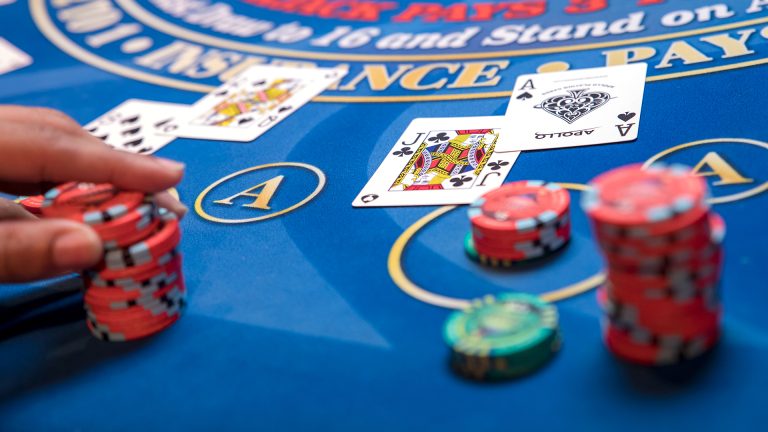
How online casino registration works for new players

Registering at an online casino can be an exciting step into the world of gaming. The process is typically straightforward, allowing new players to quickly access a variety of games, including slots, table games, and live dealer experiences. Players usually begin by providing essential personal information, creating a username and password, and agreeing to the casino’s terms of service. A successful registration allows players to explore the extensive gaming options and take advantage of welcome offers that can enhance their initial experience.

Upon registration, players will often need to verify their identity, which is crucial for security reasons. This step helps protect both the casino’s operations and the player’s information, ensuring a safe environment for online gaming. After verification, players can make their first deposits and start enjoying the games available at their chosen online casino.

How to choose the right payment method

Selecting the best payment method is paramount for a smooth gaming experience. Here’s a simple guide to help players navigate this process:

  1. Evaluate Your Needs: Consider how much you plan to deposit and withdraw regularly.
  2. Check Speed: Look for payment options that process transactions quickly, especially for withdrawals.
  3. Assess Security: Prioritize methods known for providing robust security features.
  4. Look for Fees: Be aware of any transaction fees associated with different payment options.
  5. Consider Availability: Ensure your preferred method is accepted by the online casino you choose.
  • Understand what you need based on your gaming habits.
  • Quick transactions mean more time for playing.
  • Safety features protect your personal and financial information.

Practical details for payment options at online casinos

When exploring payment options, players will find a variety of methods available, each with its benefits and drawbacks. Common payment methods include credit cards and e-wallets, which are widely accepted at many online casinos. Credit cards, such as Visa and MasterCard, offer a familiar form of payment and often come with built-in fraud protection. They are typically instant for deposits but may take a bit longer for withdrawals.

E-wallets like PayPal, Skrill, and Neteller are increasingly popular due to their convenience and security. Transactions through e-wallets are known for being fast, often allowing for immediate deposits and quicker withdrawals compared to traditional banking methods. Furthermore, e-wallets add an extra layer of anonymity, as players do not need to provide their credit card details directly to the casino.

  • Credit cards: Widely accepted and known for fraud protection.
  • E-wallets: Quick transactions and enhanced privacy.
  • Bank transfers: Reliable but may take longer for processing.

Choosing a payment method that aligns with your preferences can significantly enhance your gaming experience. The right choice allows you to focus on enjoying the wide array of slots and table games available, without the stress of payment issues interfering with your fun.

Key benefits of varied payment options

Having multiple payment options provides several advantages for players. First and foremost, it allows for flexibility, accommodating the preferences of different players. Some players may prefer the convenience of e-wallets, while others might feel safer using credit cards. Additionally, having various payment methods can enhance the overall gaming experience, as players can quickly switch between methods based on their needs and circumstances.

  • Flexibility: Choose the payment method that suits your style.
  • Speed: Quick transactions mean more time for gaming.
  • Security: More choice can mean enhanced safety for your funds.
  • Promotions: Some casinos offer bonuses for specific payment methods.

These benefits emphasize the importance of players reviewing their payment options carefully before committing to a method, ensuring they choose one that supports their gaming goals effectively.

Trust and security in online casinos

When engaging in online gaming, trust and security should always be a top priority. Reputable online casinos implement advanced security measures to protect players’ personal and financial information. This includes utilizing encryption technology to secure transactions, ensuring that sensitive data remains confidential. Additionally, renowned casinos are licensed and regulated by recognized authorities, adding an extra layer of assurance for players.

Many players also prefer to use payment methods that offer buyer protection or fraud prevention services. This means that in the unlikely event of a dispute, players can often recover their funds more easily. Understanding the safety features associated with each payment method is crucial when selecting how to deposit or withdraw at an online casino.

Why choose the right online casino for your gaming experience

Choosing the right online casino can define your overall gaming experience. A casino that prioritizes a user-friendly interface, mobile compatibility, and exceptional customer support can create a welcoming environment for players. Many top online casinos offer 24/7 customer support, ensuring that assistance is always available, whether you have questions about games or payment processes.

Additionally, many casinos present appealing welcome offers to attract new players, enhancing the initial experience. By selecting a casino with a variety of gaming options, including slots, table games, and live dealer experiences, players are ensured a comprehensive gaming journey. Making an informed choice about your online casino can lead to countless enjoyable hours of gaming.

In the Middle East, this movement is even more immediate. Geopolitical developments—policy decisions, regional alignments, and conflict dynamics—filter through energy markets, fiscal systems, and investor sentiment before ultimately influencing real estate.

What we are witnessing today is not a reactive cycle.

It is a structured transmission of capital.

And those who understand it don’t follow the market—they position ahead of it.

Dubai Real Estate Market Performance 2025: Liquidity, Growth, and Global Demand

Any serious analysis must begin with what the market has already demonstrated.

In 2025, Dubai recorded over AED 917 billion ($249.6 billion) in real estate transactions, reflecting approximately 20% year-on-year growth.

At the same time:

  • Prime residential values appreciated by 15–18% in under two years
  • Rental yields stabilised between 6–8% across key segments
  • The UAE attracted 9,800+ high-net-worth individuals, the highest globally

These are not short-term spikes—they indicate structural strength.

For long-term investors, the UAE is not an emerging opportunity. It is a proven environment defined by stability, security, and consistent expansion, even during global uncertainty.

Capital Flight to Stability: Why Global Investors Are Choosing Dubai

In periods of geopolitical tension, capital does not disappear—it relocates.

And it moves with clear intent.

Investors prioritise jurisdictions that offer:

  • Legal and regulatory clarity
  • Currency stability
  • Economic predictability

Dubai continues to rank highly across all three.

Its ecosystem—combining a transparent legal framework, tax efficiency, and global accessibility—positions it as a natural destination for international capital.

The result is visible in transaction data: sustained inflows from Europe, Asia, and global markets, even as uncertainty persists elsewhere.

This is not defensive investing.

It is strategic capital allocation.

Globalised Demand Model: The Structural Advantage of Dubai Property Market

One of the most overlooked strengths of Dubai’s real estate market is its international demand architecture.

Unlike domestic-driven markets, Dubai operates within a globally integrated system.

A significant share of transactions—particularly in the off-plan segment—comes from international investors. This creates:

  • A diversified demand base
  • Reduced reliance on a single economic region
  • Continuous transaction momentum

In practical terms, capital rotation across regions sustains market activity.

This structural depth is what allows Dubai to remain resilient while other markets become cyclical.

Dubai Property Investment in Global Portfolios: From Opportunity to Allocation Strategy

Dubai real estate is no longer viewed as a speculative play.

It has evolved into a core component of global asset allocation strategies.

Investors now position Dubai property as a dual-purpose asset:

  • Yield-generating, through competitive rental returns
  • Growth-oriented, through long-term capital appreciation

This shift is supported by structural fundamentals:

  • Zero annual property tax
  • Transparent and investor-friendly regulations
  • AED currency stability via USD peg
  • Rental yields outperforming many global cities

For international investors, this combination is not common.

Which is precisely why capital continues to flow.

Energy Markets and Real Estate: The Indirect but Powerful Connection

Geopolitical risk in the Middle East typically impacts energy markets first.

And energy markets influence capital flows globally.

Fluctuations in oil prices and trade route stability affect:

  • Government revenues
  • Liquidity conditions
  • Investor sentiment

These shifts then translate into asset allocation decisions.

Within Dubai real estate, this is already evident:

  • Increased preference for ready and near-completion properties
  • Stronger focus on income-producing assets

This is not market hesitation—it is capital becoming more selective.

Dubai Property Market Trends 2026: Slower Decisions, Stronger Fundamentals

Current market behaviour reflects a shift in pace—not in direction.

Buyers remain active, but:

  • Decision cycles are longer
  • Due diligence is deeper
  • Value assessment is more precise

Luxury segment activity continues, albeit with more calculated engagement.

Meanwhile:

  • Development pipelines remain active
  • Infrastructure expansion continues
  • Economic diversification strengthens the broader ecosystem

There is no withdrawal of demand.

Only a refinement in how capital is deployed.

Developer Strategy Shift: Aligning with Disciplined Investor Expectations

Developers are adjusting in response to a more analytical investor base.

Projects that maintain strong traction typically prioritise:

  • Strategic locations with long-term relevance
  • Competitive and realistic pricing
  • Flexible, extended payment plans
  • Proven delivery timelines

There is also a clear pivot toward:

  • Mid-market luxury positioning
  • Rental yield optimisation
  • Post-handover financial flexibility

This alignment reflects a market that is no longer driven by speculation—but by structured investment logic.

Safe Haven Real Estate in the UAE: A Function of Measurable Behaviour

The concept of “safe haven” is often overused.

In Dubai, it is measurable.

It is reflected in:

  • Sustained capital inflows
  • High-net-worth migration trends
  • Consistent transaction volumes

Even in periods of geopolitical tension, the UAE continues to attract capital—not by perception, but by performance.

Conclusion: Capital Doesn’t Panic—It Repositions

Geopolitical developments do not weaken strong markets.

They reveal them.

Dubai is not experiencing a slowdown in fundamentals—it is experiencing a recalibration in investor behaviour.

  • Capital is still entering the market
  • Demand remains structurally intact
  • Development activity continues

The only change is how decisions are being made.

For investors who understand the relationship between geopolitics, energy markets, and capital flow, this phase is not a risk.

It is a signal.

And those who read it correctly position themselves ahead of the next growth cycle.